01Consultancy · Consultancy & Digital Transformation
“From Vision to Reality” Why Startups Need More Than Just Technology?
Scaling a startup from its inception to a thriving business is a complex journey that requires more than just a good idea and passion. While technology is often at the forefront of a startup’s operations, success is built on a multifaceted foundation that includes a solid business plan, an effective market strategy, the right team,
- Published
- Reading time
- 3 min read
- Author
- Grow Digital Team
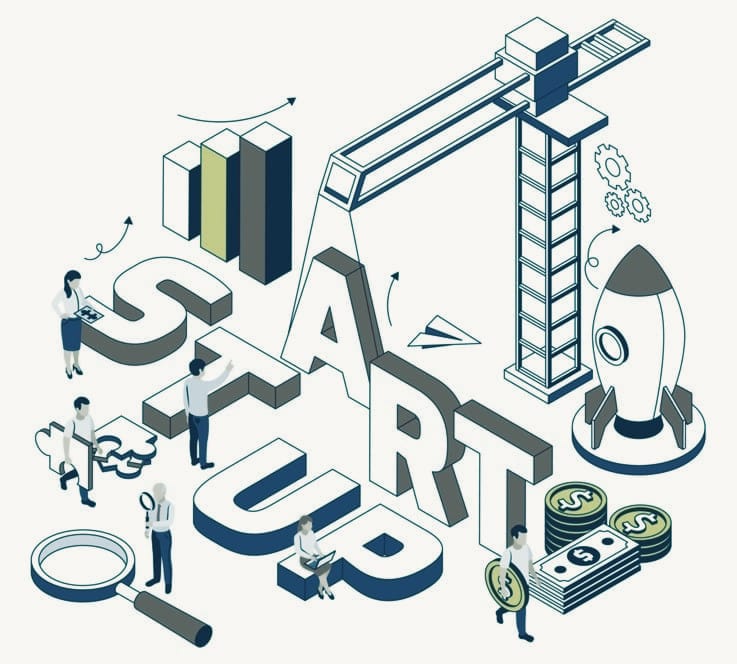
Scaling a startup from its inception to a thriving business is a complex journey that requires more than just a good idea and passion. While technology is often at the forefront of a startup’s operations, success is built on a multifaceted foundation that includes a solid business plan, an effective market strategy, the right team, and a robust technology infrastructure. For many entrepreneurs, especially those with limited experience, navigating these areas can be challenging. However, by leveraging expert support in critical areas, startups can accelerate their growth and enhance their chances of long-term success.

One of the fundamental pillars of a successful startup is a well-crafted business plan. While founders may be deeply passionate about their ideas, they often lack the experience needed to create a plan that accounts for market dynamics, competition, and sustainable growth. A strong business plan is not just a formality—it is a strategic guide that sets clear objectives, outlines the path to profitability, and anticipates potential challenges. Without this roadmap, even the most innovative concepts can struggle to gain traction.
Equally important is the startup’s approach to entering the market. A carefully devised go-to-market strategy is crucial for establishing a foothold in a competitive environment. This strategy involves understanding the target audience, fine-tuning the product or service offering, and selecting the most effective channels for promotion and distribution. An effective go-to-market plan can be the difference between quickly gaining momentum and languishing unnoticed in a crowded marketplace.
Human resources also play a vital role in the growth of a startup. Building a team that not only fills roles but also aligns with the company’s vision is essential for driving innovation and executing the business strategy. However, recruiting the right talent can be particularly difficult for young businesses, especially when operating with limited resources and experience. Nonetheless, assembling a skilled and motivated team is crucial for scaling the business and achieving long-term success.
In addition to these foundational elements, the technology infrastructure is a critical factor in a startup’s ability to scale. For many startups, particularly those led by non-technical founders, building this infrastructure can be a daunting task. This is where outsourcing the technology component, especially during the Minimum Viable Product (MVP) phase, can be highly advantageous.
Outsourcing technology development to expert companies offers several significant benefits. Firstly, it ensures that the MVP is built on a solid foundation, incorporating the latest technologies and best practices. Experienced firms bring a wealth of knowledge in creating scalable, secure systems, which is essential for startups aiming to grow rapidly without technical setbacks.

Moreover, outsourcing allows startups to tap into high-quality technical expertise without the burden of maintaining a full-time, in-house team. This approach is particularly cost-effective, enabling startups to achieve a level of technical sophistication that might otherwise be unattainable. By leveraging external resources, startups can ensure that their MVP is not only functional but also innovative and competitive in the market.
Cost efficiency is another crucial advantage of outsourcing. Building and maintaining an in-house technology team can be prohibitively expensive, particularly for early-stage startups with constrained budgets. Outsourcing provides access to a full spectrum of technical skills at a fraction of the cost, freeing up resources that can be invested in other critical areas such as marketing and customer acquisition.
Lastly, outsourcing the technology component allows founders to focus on their core competencies—driving the vision and strategy of the business. By entrusting the technical development to experts, founders can ensure that their time and energy are directed toward growing the business, rather than being consumed by technical challenges.
In conclusion, scaling a startup requires a comprehensive approach that goes beyond technology. A strong business plan, a well-thought-out market strategy, the right team, and a robust technology infrastructure are all essential components. For many startups, outsourcing technology development, particularly during the MVP phase, is a strategic decision that provides quality, innovation, and cost savings. By leveraging expert support in these critical areas, startups can lay a solid foundation for growth and focus on achieving long-term success.
01Consultancy
Where to invest in digital, and in what order.