03Software · Software Development
AI and Health: Revolutionizing the Future of Medicine
Explore how AI in healthcare transforms diagnostics, treatment, and access, improving patient care and revolutionizing the future of medicine
- Published
- Reading time
- 3 min read
- Author
- Grow Digital Team
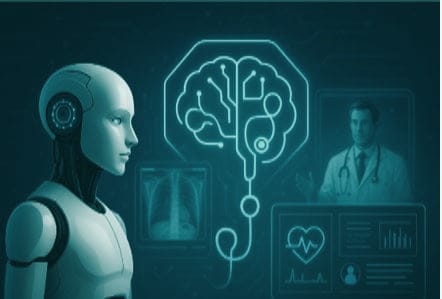
Imagine an AI-powered healthcare chatbot developed by innovators like Grow Digital that instantly analyzes symptoms, schedules appointments, and even predicts potential health risks before they escalate. This isn’t science fiction; it’s the near future of medicine.
Artificial Intelligence (AI) is transforming healthcare at an unprecedented pace, offering innovative solutions to improve diagnostics, treatment, and patient care. With the ability to analyze vast amounts of data quickly and accurately, AI is helping medical professionals make better decisions, reduce errors, and personalize treatments. AI-driven technologies are reshaping the healthcare industry, making it more efficient and accessible. This article explores the key ways AI is revolutionizing healthcare and what the future holds.
1. AI in Diagnostics and Early Detection
One of the most significant contributions of AI in healthcare is its ability to enhance diagnostics. Machine learning algorithms can analyze medical images—such as X-rays, MRIs, and CT scans—with remarkable precision, often detecting abnormalities faster than human doctors. For example:
- Cancer Detection: AI models can identify early signs of breast, lung, and skin cancer with high accuracy.
- Neurological Disorders: AI helps in early diagnosis of Alzheimer’s and Parkinson’s disease by analyzing speech patterns and brain scans.
- Retinal Diseases: AI-powered tools like Google’s DeepMind can detect diabetic retinopathy from eye scans.
These advancements enable earlier interventions, improving patient outcomes and reducing healthcare costs.
2. Personalized Medicine and Treatment Plans
AI is paving the way for personalized medicine, where treatments are tailored to individual patients based on their genetic makeup, lifestyle, and medical history. Key applications include:
- Drug Development: AI accelerates drug discovery by predicting how different compounds will interact with human biology.
- Genomic Analysis: AI helps decode genetic data to identify disease risks and recommend preventive measures
- Wearable Devices: AI-powered wearables (like smartwatches) monitor vital signs in real-time, alerting users and doctors to potential health issues.
By leveraging AI, healthcare providers can move from a one-size-fits-all approach to customized care, improving treatment efficacy.
3. AI in Administrative Efficiency and Telemedicine
Beyond clinical applications, AI is streamlining healthcare administration and expanding access through telemedicine:
- Automated Scheduling & Billing: AI chatbots handle appointment bookings, insurance claims, and patient inquiries, reducing administrative burdens.
- Virtual Health Assistants: AI-driven platforms provide 24/7 medical advice, reducing unnecessary hospital visits.
- Remote Patient Monitoring: AI analyzes data from IoT devices to manage chronic conditions like diabetes and hypertension remotely.
These innovations make healthcare more efficient and accessible, particularly in underserved regions.
4. Ethical Considerations and Challenges
Despite its benefits, AI in healthcare raises important ethical concerns:
- Data Privacy: Protecting sensitive patient data from breaches is critical.
- Bias in AI Models: If trained on non-diverse datasets, AI may produce biased results, affecting minority
- Regulation & Accountability: Clear guidelines are needed to ensure AI tools are safe and effective.
Addressing these challenges is essential for responsible AI adoption in medicine.
AI is undeniably revolutionizing healthcare, enhancing diagnostics, enabling personalized treatments, improving efficiency, and expanding access. However, ethical and regulatory frameworks must evolve alongside these technologies to maximize benefits while minimizing risks. The future of AI in health is bright, but it requires collaboration between technologists, doctors, and policymakers to ensure responsible and equitable adoption.
Stay updated on AI advancements in healthcare by following industry leaders, research institutions, and trusted tech innovators. Explore how these breakthroughs can benefit your practice or personal health journey. Visit www.growdigital.com or email us at info@growdigital.com for more info.
Follow us on LinkedIn for more updates: www.linkedin.com/company/growdigitalmea/
03Software
Mobile, web, business applications and AI.